
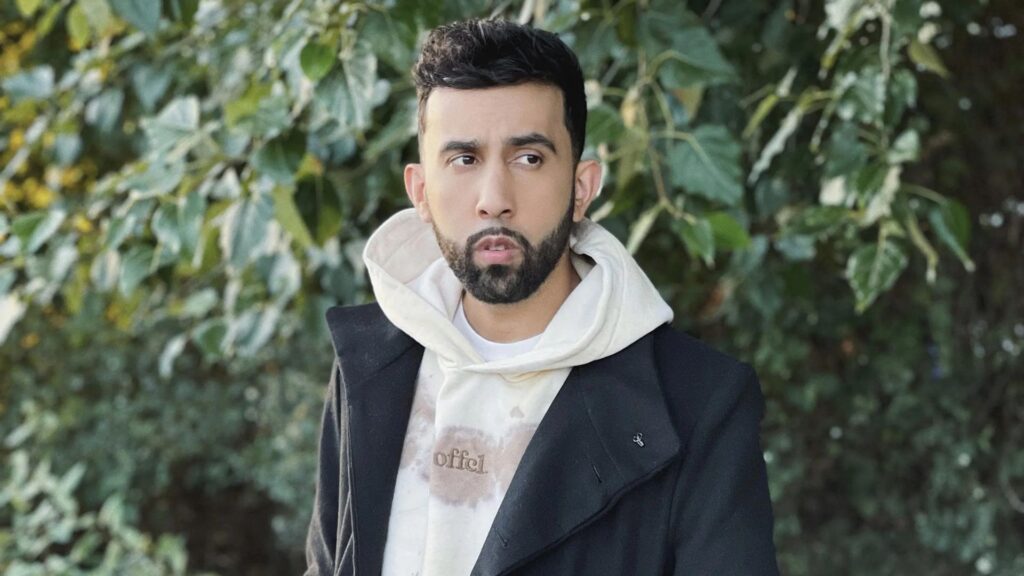
Neal Chatha was born in Calgary, Alberta, to a Sikh family. Father Daljit Chatha immigrated from Jalandhar, Punjab; his mother came from the UK. That cross-cultural household is the secret sauce. He started singing at five, got classical training, and by 16 was already producing beats in the family basement.
Calgary isn’t exactly a Punjabi music hub. Yet that distance gave him something most India-based artists never had: space to experiment without constant industry pressure. He earned a business marketing degree from Mount Royal University while secretly building a career most classmates never noticed.
The Double Life: Neal by Day, Perfectionist Star by Night
CBC once called it perfectly: mild-mannered Calgarian by day, international Punjabi superstar by night. Neal loves Star Wars, cracks jokes, and takes out the garbage after tours. The PropheC? Mysterious, detail-obsessed, never smiles in photoshoots.
His dad was skeptical at first—until fans showed up at family events in India. “Whatever city we were in, people were waiting to meet him,” Daljit later said. That moment flipped the script. Family still keeps him humble: “The PropheC can take out the garbage,” his mom jokes.
From Age 5 to “Sohni”: How Classical Training Met Basement Beats
Most people picture Punjabi artists starting in gurdwaras or village weddings. The PropheC’s path was different. Classical vocal lessons at five, then hip-hop production in his teens. His first official song, “Sohni,” landed on the 2011 debut album Forever. It wasn’t an overnight viral hit—it was the slow burn that proved a Canadian kid could write authentic Punjabi music that resonated back home.
Signature Sound Explained – Why His Fusion Actually Works
Here’s what separates The PropheC from the pack: he doesn’t just slap English hooks on Punjabi verses. He studied A.R. Rahman and Nusrat Fateh Ali Khan the same way he studied Drake. The result? Tracks that feel modern without losing the emotional weight of traditional folk melodies. “Bollywood meets The Weeknd,” he once described it. Punjabi lyrics, English flair, production crisp enough for global playlists.
Discography Breakdown: Every Album That Mattered (2011–2024)
- Forever (2011): The basement breakthrough. “Sohni” still gets played at weddings 15 years later.
- Futureproof (2014): Proved it wasn’t a fluke.
- The Lifestyle (2016): “Kina Chir” era begins—his first true anthem.
- The Season (2019): Knocked Drake off charts; topped Billboard India.
- Solace (2021) and Midnight Paradise (2023): Deeper, moodier vibes.
- The Remedy (2024): Latest full-length before the 2025–2026 singles wave.
Each project shows growth. Early work was raw energy; recent stuff is polished storytelling.
The Breakthrough Hits – What “Kina Chir,” “Dilawara” & Others Really Mean
Let’s cut the fluff. “Kina Chir” (176+ million streams) isn’t just a love song—it’s the sound of longing that hits every second-generation listener who’s ever felt caught between two worlds. “Dilawara” with Ezu became a chill anthem for late-night drives. “Sohne Lagde” (Sidhu Moose Wala feature) showed he could hold his own with heavyweights.
Top streamed tracks (Spotify 2026 snapshot):
| Song | Streams (approx.) | Year/Notes |
|---|---|---|
| Kina Chir | 176M | Career-defining |
| Dilawara | 87M | With Ezu |
| Sohne Lagde | 68M | Sidhu Moose Wala collab |
| Dil Dardeh | 31M | 2025 fresh energy |
| For You | Climbing fast | 2026 Vee collab |
2025–2026 Releases: The PropheC Is Far from Finished
2025 brought Lost & Found EP, “Aundi Jandi,” “Pull Up” with Ezu. Early 2026 dropped “For You” (Vee) and “Churayi” (Jonita). These aren’t nostalgia plays—they’re current, radio-ready, and already racking views in the millions on YouTube. The PropheC isn’t coasting on 2016 glory; he’s still in the studio, still evolving.
Key Collaborations That Raised His Game
Ezu, Amrit Maan, Navaan Sandhu, Mickey Singh, Raxstar, even KSHMR and Talha Anjum on the 2023 rap project KARAM. Each one expands his reach without diluting his voice. He pitched an early version of “Vibe” to Diljit Dosanjh—proof the respect flows both ways.
Impact on Global Punjabi Music: Diaspora Doesn’t Mean Diluted
Counter-intuitive point: the biggest evolution in Punjabi music right now isn’t coming only from Punjab. Diaspora voices like The PropheC bring production standards and genre-blending that force the entire scene to level up. He’s toured Europe, North America, India—and still returns to Calgary. That perspective matters in 2026 when playlists are global by default.
What Most Fans Still Misunderstand About The PropheC
They think he’s “commercial.” Reality? He runs PropheC Productions himself. Most assume he’s India-based. He’s Canadian through and through. And no, he doesn’t chase every trend—he builds them quietly, then drops when the moment’s right.
Practical Starter Playlist for Beginners (20s–40s Edition)
New to Punjabi music? Start here, 8 tracks, no filler:
- “Kina Chir” – the gateway drug
- “Dilawara” – smooth entry to collabs
- “For You” (2026) – current vibe check
- “Sohni” – respect the roots
- “Mehrma” (DJ Lyan) – late-night mood
- “To The Stars” – motivational shift
- “Pull Up” – party energy
- “Dil Dardeh” – emotional depth
Play in order. You’ll go from curious to hooked in under 30 minutes.
Production Secrets & His Own Label: Lessons for Aspiring Artists
He produces almost everything. That control is rare. Lesson for anyone in their 20s–30s trying to break in: learn the business side early. Marketing degree wasn’t wasted—it taught him how to treat music like a brand without selling out.
Touring, Fame & Staying Grounded in 2026
Apollo Theatre in London, sold-out shows in India, yet back home he’s still “Neal.” Fans spotting him walking the dog still feels surreal, he admits. That groundedness is why his music never feels manufactured.
Personal Side: Family, Influences & the Star Wars Fan Behind the Mic
Parents remain his biggest role models. Influences range from Nusrat Fateh Ali Khan to Drake. He’s private about relationships—smart move in an oversharing era. The PropheC persona protects the real Neal, and it works.
FAQ
What is The PropheC’s real name and age? Neal Chatha (Nealveer Chatha), born September 8, 1991—34 in 2026.
Where is The PropheC from? Calgary, Alberta, Canada—second-generation Indo-Canadian.
What are The PropheC’s biggest songs in 2026? “Kina Chir” still leads, but “For You,” “Churayi,” and “Dil Dardeh” are the fresh chart climbers.
Does The PropheC write and produce his own music? Yes—almost entirely. That’s why his sound feels consistent.
Is The PropheC still active? Very. New singles and EPs dropping through 2026 prove it.
How does The PropheC compare to Diljit Dosanjh or AP Dhillon? Different lane. Diljit is mass-appeal king; AP Dhillon is moody trap. The PropheC sits in the polished, self-produced fusion space.
Any upcoming tours or projects? He tours regularly; watch his Instagram and official site for 2026 dates.
Ready to Press Play?
The PropheC isn’t chasing trends—he’s been building a catalog that ages better than most. If you’re in your 20s or 30s and want music that feels both nostalgic and brand new, start with that starter playlist above. Then follow his Spotify, YouTube channel, and official site. One track in and you’ll understand why a kid from a Calgary basement became one of the most reliable names in Punjabi music.
Hit play on “Kina Chir” right now. Thank me later. And if you’re an aspiring artist reading this—take notes. The PropheC’s blueprint is public: train hard, produce yourself, stay grounded, and let the music speak louder than the hype.